A factory retrofit in Saudi Arabia often starts with a practical purchasing question: which parts can be ordered confidently before the existing system is opened? Resolve that question through a measured survey, a coordinated shutdown plan and a complete connection schedule. An old drawing alone may leave the buyer with ducts that cannot meet the installed interfaces.
Establish the scope and verify the existing system
The official Saudi Mechanical Code overview, SBC 501, covers mechanical systems, including ventilation and air ducts, and addresses modification as well as installation. Have the project engineer confirm the applicable edition, project requirements and review responsibilities before placing the order. This checklist does not determine a project's approval or permit requirements.
Arrange an agreed survey with the site team. Record:
- Existing duct dimensions, connection styles and the actual tie-in positions.
- Nearby services, structural obstacles and access around the proposed route.
- The condition of retained ducts, supports and connection surfaces.
- Equipment identification, system duty and any changes to the production process.
- Dimensions that remain concealed and need confirmation during the shutdown.
Mark photographs against drawing references. Separate verified dimensions from provisional ones, with a named person responsible for closing each uncertainty.
Purchase a connection kit, not just straight lengths
Build the bill of materials around each tie-in. A replacement run may require transition pieces, bends, branches, sleeves, flanges, gaskets, fixings and inspection access. Check which accessories are included in each quoted assembly.
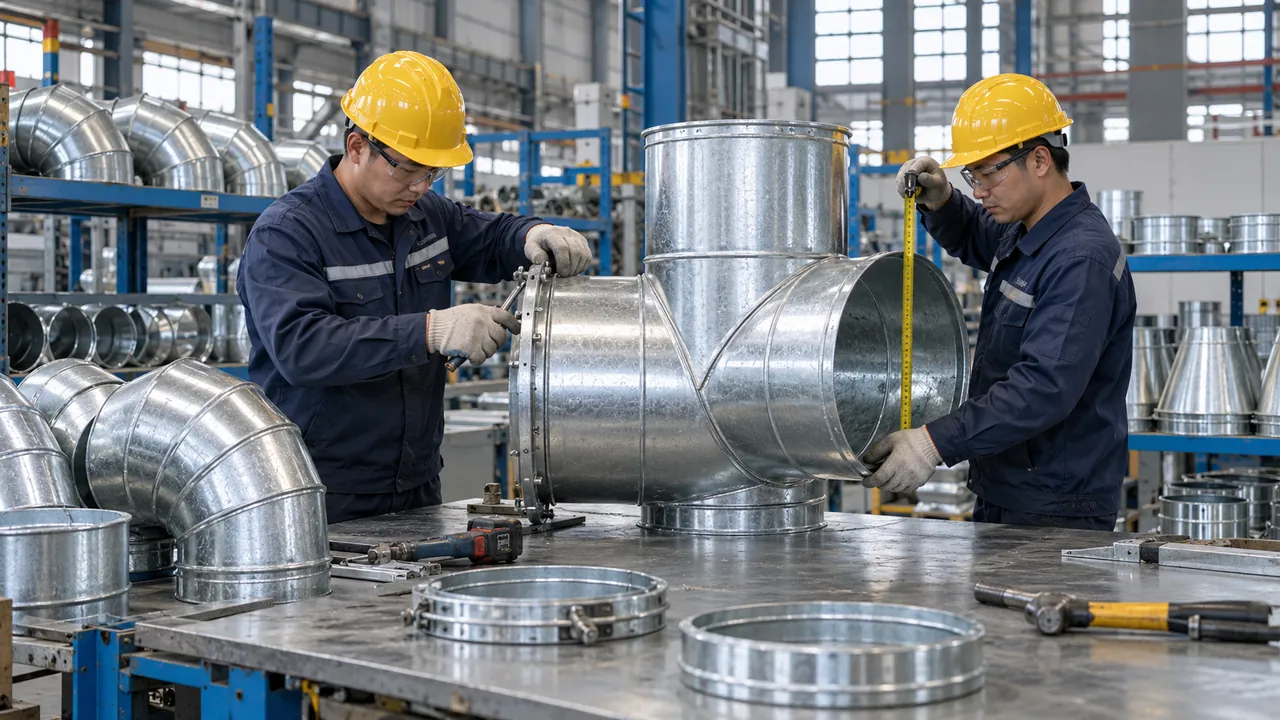
Specify each Codo circular by its approved angle and connection. Identify the branch orientation and sizes for every Te de conducto. Where the equipment design includes a Unión flexible, confirm its construction and connection arrangement with the designer. These catalog options still need to match the surveyed system and approved specification.

Illustrative factory inspection with personnel; this is not a Saudi Arabia project record.
Coordinate the shutdown with the people who run the plant
Agree the work sequence with production, maintenance and the appointed contractor before fabrication is released. Identify when the system becomes available, who authorizes work to start and what evidence is needed before restart. The site team should define its own isolation and safe-work arrangements.
Decide which assemblies can be prepared in advance and which dimensions require a final site check. Confirm the installation access, removal route, temporary storage and responsibility for any on-site adjustment. Label packages by work stage so the crew can find the first connection kit without unpacking the entire order.
Include sealing and insulation interfaces in the scope
The U.S. Department of Energy's metal-duct guidance explains how sealing reduces leakage losses and how insulation with a vapour barrier helps control heat transfer and condensation in unconditioned spaces. Use those general principles when discussing the retrofit interfaces; the project designer must specify the actual sealing and insulation details.
List the retained and new sections, the finish at their joints and the person responsible for reinstating insulation after the connection is completed. Make any inspection access visible on the coordinated drawing.
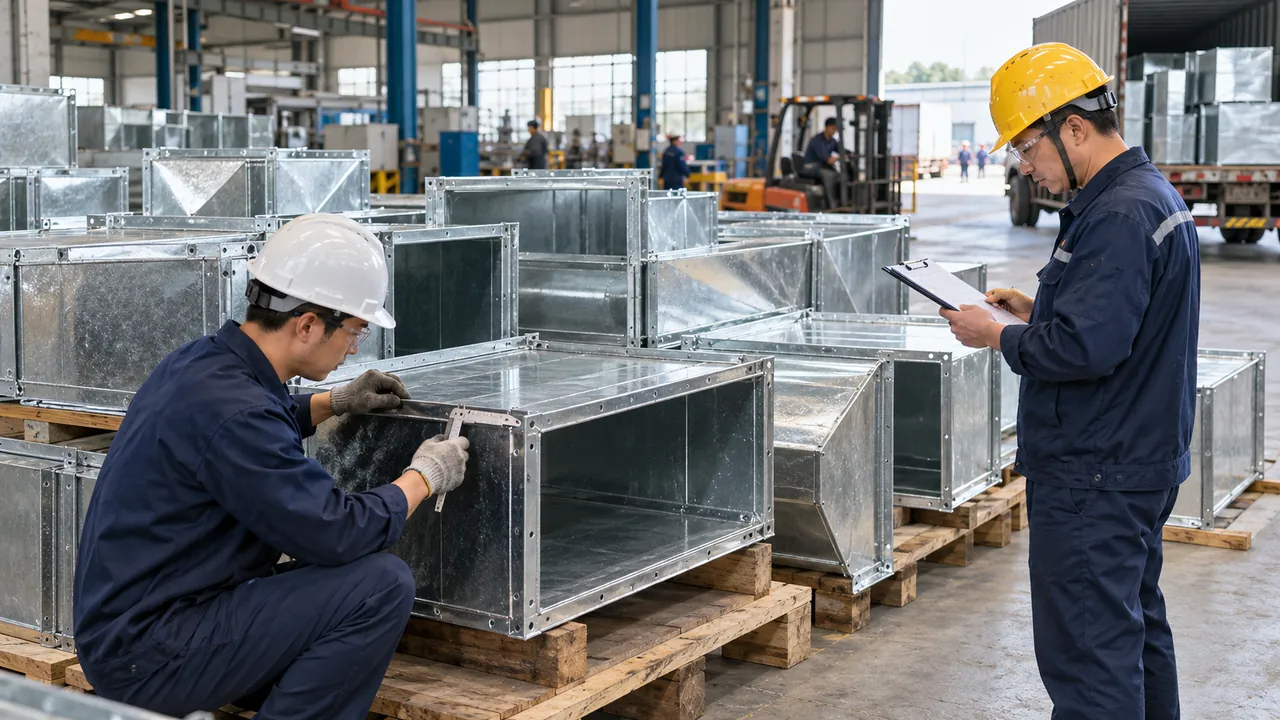
Illustrative duct inspection before dispatch; no Saudi Arabia delivery or customer is represented.
Release the order with a restart handover checklist
The purchase package should contain the survey record, approved revision, itemized quantities, connection details and agreed inspection points. Before dispatch, reconcile the package list with the shutdown sequence. At handover, record the installed changes, outstanding actions and the project team's agreed inspection and testing results. Keep the final drawing and component identifiers available to the maintenance team.