For an Indonesian workshop adding a production bay, supply air and process extract should be described as separate duties before duct sizes are discussed. A useful handover package connects the equipment list, airflow design, material schedule and installation drawings. This helps the purchasing team compare offers without leaving the installer to resolve missing design decisions.
Map the work process before choosing the route
Identify where people work, where replacement air enters and which operations generate emissions. The U.S. EPA's explanation of capture systems describes local exhaust using a hood, ducts and a fan to take emissions from their source toward a control device. It also identifies airflow and capture-device integrity as important to performance. The project engineer should determine which workshop processes need specialist capture and treatment.
Keep the following information attached to each system identifier:
- The production operation and its normal operating sequence.
- The purpose of each supply, return or extract branch.
- Equipment connections, terminal locations and design airflow information.
- The intended exhaust destination and any specified air-cleaning equipment.
- Access needed for inspection, cleaning and future equipment maintenance.
Use the workshop extract layout reference to discuss routing and access. Its illustrative layout does not establish suitability for a particular industrial process.
Confirm exposure and corrosion resistance by duct section
Ask the site team to describe the air carried inside the duct and the conditions outside it. Record cleaning chemicals, possible condensate, washdown practices and any outdoor or sheltered sections. Have the designer assess material compatibility, including joints, fasteners and coatings, against that actual exposure.
Conducto helicoidal galvanizado and Conducto helicoidal inoxidable are different procurement options. Specify the required material and grade for each relevant section; avoid treating a material name as a guarantee of compatibility with every vapour or cleaning agent. Any change in the production process should be reported before the material schedule is finalized.

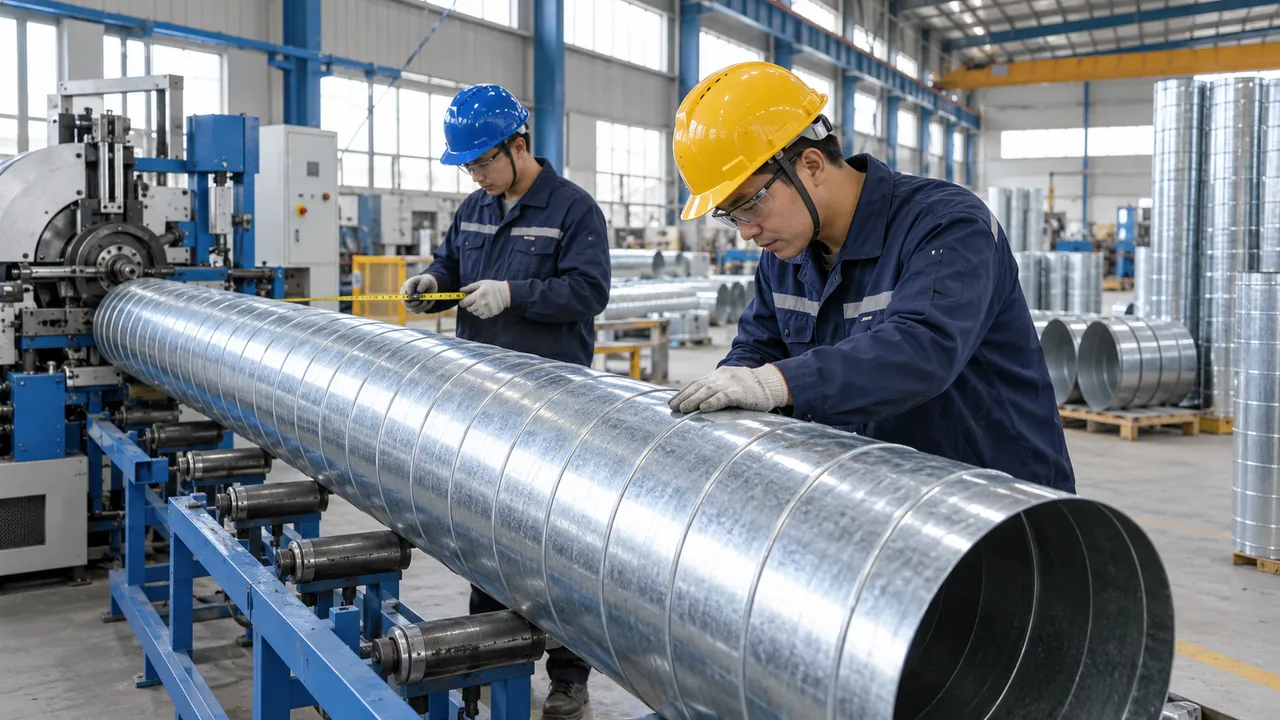
Illustrative installation coordination with personnel; this does not document an Indonesian customer site.
Give the supplier and installer the same drawing package
Issue one controlled revision showing duct routes, elevations, connection details and component tags. Identify the person who can approve a dimensional change. Include a schedule that links every fitting to the drawing, rather than sending unconnected sketches to different parties.
A practical handover bundle includes:
- A coordinated plan and sections showing difficult interfaces.
- Duct and fitting quantities with material assignments.
- Equipment and terminal connection details.
- Approved support interfaces and inspection access positions.
- The agreed measurement, inspection and commissioning responsibilities.
Keep questions and approved answers with the revision record. When the route changes, update both the drawing and the item schedule before releasing the affected components.
Plan installation and receiving for the actual destination
Confirm the workshop's location, receiving address, unloading access and storage arrangements. BMKG publishes location-based weather forecasts for Indonesia. Use current information for scheduling exposed unloading or roof work, while the designer assesses long-term environmental exposure separately. A forecast does not replace the site's own work planning.
Ask the receiving team to check package identifiers against the drawing and material schedule. Keep coated or finished surfaces protected according to the agreed packaging and storage instructions, and record any damage before installation.

Illustrative component inspection with personnel; no Indonesian project or local installation service is claimed.
Close the loop at handover
Capture installed route changes, component identification and the project team's inspection and performance records. Give the operating team the final drawings and maintenance information. This makes the next workshop alteration easier to specify without relying on memory or an outdated purchase list.