A ductwork order for a project in Germany should connect the fabrication schedule with the work that follows installation. Buyers need dimensions and quantities, while installers and operators also need to identify components and reach the locations that require inspection. Discussing those interfaces before ordering helps the project team turn a product list into a practical supply package.
Define the system and the responsible people
Begin with the building use, location and purpose of each ventilation system. Distinguish general room ventilation from process extraction. Ask the responsible designer to identify the applicable project requirements and the documents that suppliers must provide. A country name alone does not establish material suitability, inspection arrangements or acceptance criteria.
The German Social Accident Insurance's indoor-workplace guidance discusses the importance of planning and servicing ventilation and air-conditioning systems. Its discussion supports considering maintenance during planning; it does not certify an individual duct product or approve a proposed installation.
Put access locations on coordinated drawings
Ask the project team to mark components that need inspection, adjustment or cleaning. Review those positions against ceilings, cable routes, pipework and other services before releasing fabrication drawings. The installer should confirm how the relevant locations can be reached after surrounding work is finished.
- Give each component a consistent reference.
- Show the approved drawing revision on the purchase schedule.
- Identify proposed access locations for the designer to review.
- Record interfaces with ceiling openings and nearby services.
- Assign responsibility for answering unresolved coordination questions.

Match components to the approved schedule
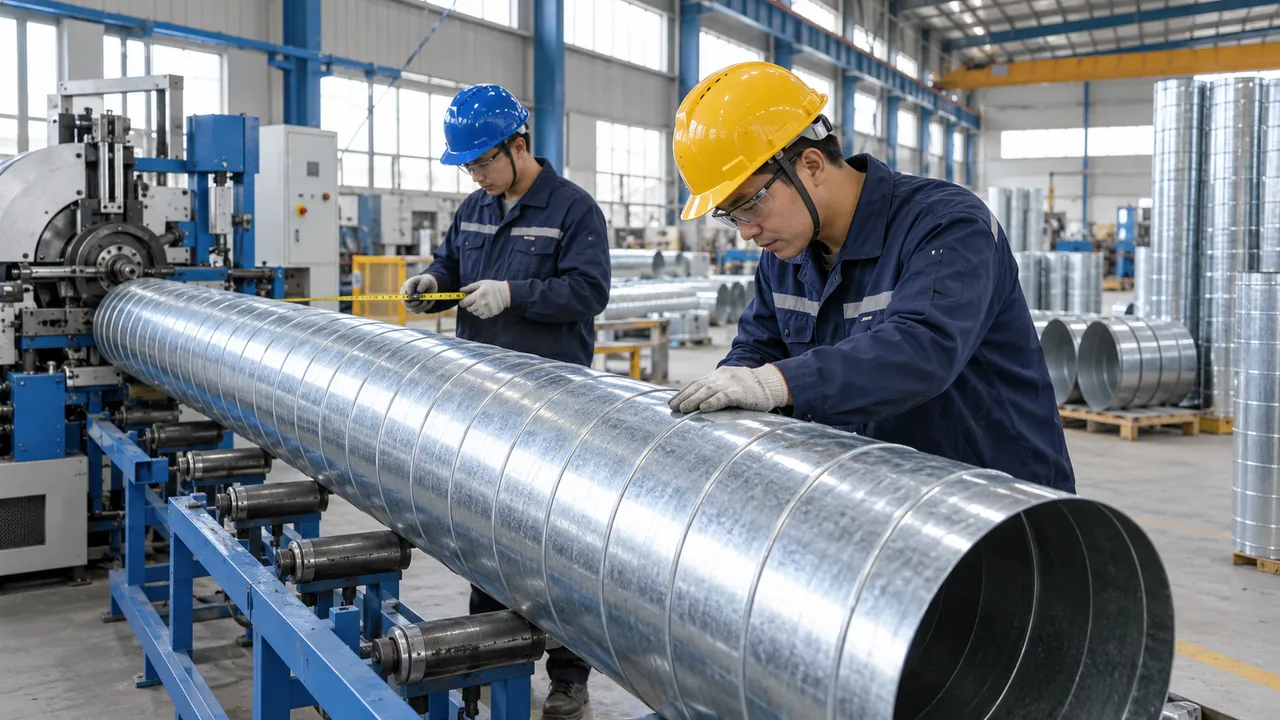
For circular routes, specify the required Saluran udara spiral galvanis and identify matching Round Bends by drawing reference. State the required dimensions, material and connection details in the enquiry. Confirm suitability against the actual service conditions rather than treating a catalogue name as a complete specification.
Where rectangular routes are required, discuss the relevant Saluran berflensa TDF interfaces with the installation team. Include the connection parts, seals and accessories within the agreed commercial scope. Record exclusions clearly so that a missing interface does not first become visible during assembly.
Our commercial and workplace references can support a discussion of coordinated duct routes. These are illustrative references, not evidence of a completed German customer project.
Keep receiving records connected to installation
Use drawing references on package lists and component labels. At receiving, compare the supplied items with the current schedule and record visible damage or dimensional discrepancies before installation. Give the supplier a clear item reference and photograph when asking for a correction or clarification.
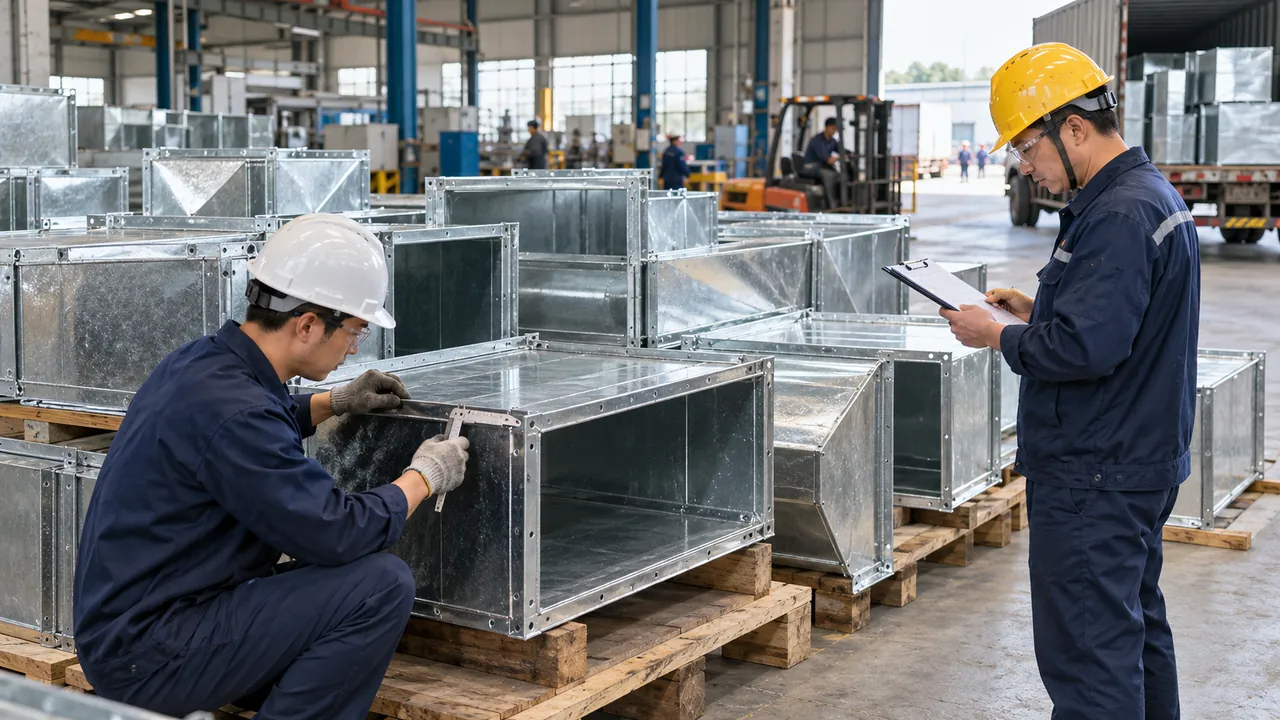
Keep the items protected in accordance with the agreed storage instructions. Ask the site team to define unloading access, storage space and the sequence in which deliveries will be used. Resolve changes through the responsible project contact instead of allowing different teams to work from separate informal lists.
Agree the handover package before purchasing
Separate supplier documentation from installation and commissioning records. Ask who will maintain the final drawing revision, identify installed components and provide maintenance information to the operator. Agree which inspection records are required and who reviews them.
A packing list confirms supplied items; it does not establish installed system performance. The project team should define testing responsibilities and acceptance criteria separately. Send the coordinated drawings, component schedule and unresolved questions with your enquiry so that the quotation addresses the intended scope. This gives buyers a clearer basis for comparing offers and preparing the next installation stage. Forms of production and inspection shown here are illustrative scenes.