
For a Canadian ductwork order, the period between workshop dispatch and site installation deserves its own plan. Components may pass through several handling stages before they reach the installation team. A clear agreement about packaging, identification and receiving checks helps the buyer describe the required protection and resolve discrepancies with useful evidence.
Start with the actual receiving conditions
Tell the supplier where the shipment will be received and how it will move to the work area. Describe available unloading equipment, sheltered space and the expected interval before installation. Do not assume that the same packing arrangement suits every destination or every delivery sequence.
Ask the site team to identify the person responsible for receiving and the person who can approve a change. Record storage and handling instructions with the purchase documents. Where specific environmental exposure, cleanliness or material requirements apply, have the responsible designer confirm them before fabrication.
Protect openings without confusing packaging with a system seal
Agree how duct openings will be protected during transport and storage, how that protection will be checked, and when it should be removed. Ask for a method appropriate to the component and handling conditions. Temporary covers and wrapping are packaging measures; they do not replace the completed system's specified joint sealing.
The 2012 edition of Natural Resources Canada's Keeping the Heat In, in its materials chapter, distinguishes appropriate duct-sealing products from common vinyl or cloth-backed tape whose adhesive can fail over time. This is residential retrofit guidance, not a project approval or a current code determination. Ask the project designer to specify the permanent sealing system separately from shipping protection.

Make the packing list useful on arrival
Match the component references in the order, approved drawings and packing list. A receiving team should be able to locate a fitting without relying on a photograph alone. Agree whether deliveries will be grouped by system, floor, installation zone or another project reference.
- Identify each package and the components it contains.
- State the drawing revision used for fabrication.
- Separate loose connectors and accessories in the schedule.
- Identify items that require particular handling or storage.
- Record which documents accompany each delivery.
For circular runs, connect the schedule to the selected مجرى هواء حلزوني مجلفن and matching كوع دائري items. For rectangular sections, confirm مجرى بفلنجة مدمجة TDF connection details against the coordinated drawings. Product names alone do not define the complete order.
Check condition before moving components into installation
Agree the receiving inspection and reporting procedure before dispatch. Check package identification, quantities, visible condition and the agreed dimensional checkpoints. If a protective cover is damaged or a flange appears distorted, record the item reference and clear photographs and refer the issue to the responsible contact before using the affected component.
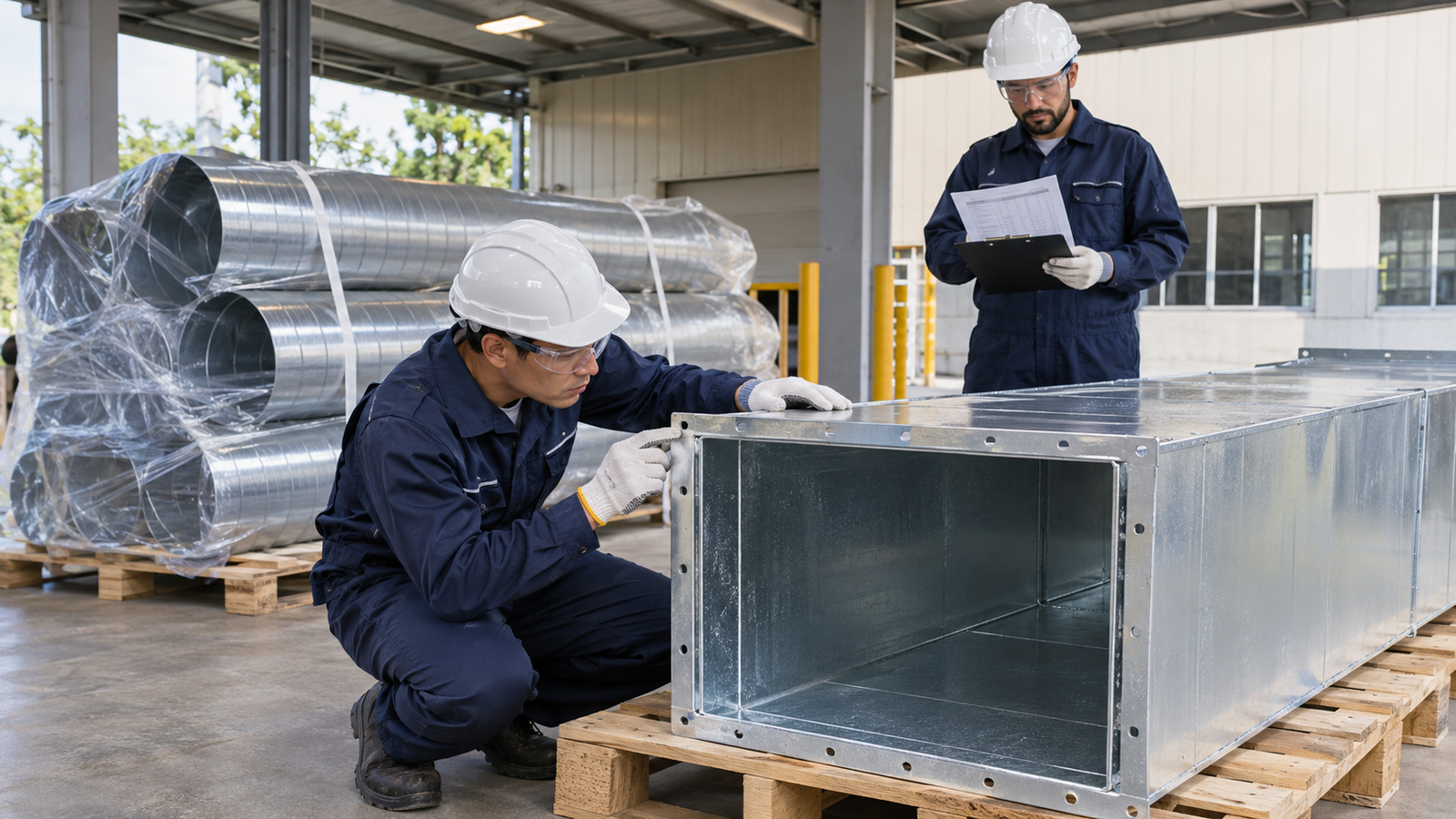
Keep inspection records with the delivery documents. A receipt signature and a visual check are different from installation acceptance or a system performance test. Define the responsibilities for each stage instead of treating one document as proof that every stage is complete.
Hand over the same information to the installer
When components move from storage to installation, pass on the latest drawing references, discrepancy records and agreed handling instructions. Our commercial and workplace references can help frame a discussion about routes and interfaces; they do not document a completed Canadian installation.
Before requesting a quotation, send the material schedule, drawings, quantities, delivery sequence and receiving conditions together. Confirm packaging, documentation, supply scope and commercial terms in writing. A coordinated enquiry gives the supplier a clearer basis for planning the shipment and gives the site team a clearer basis for checking it. All three images accompanying this article are newly generated illustrations, not photographs of customer work.